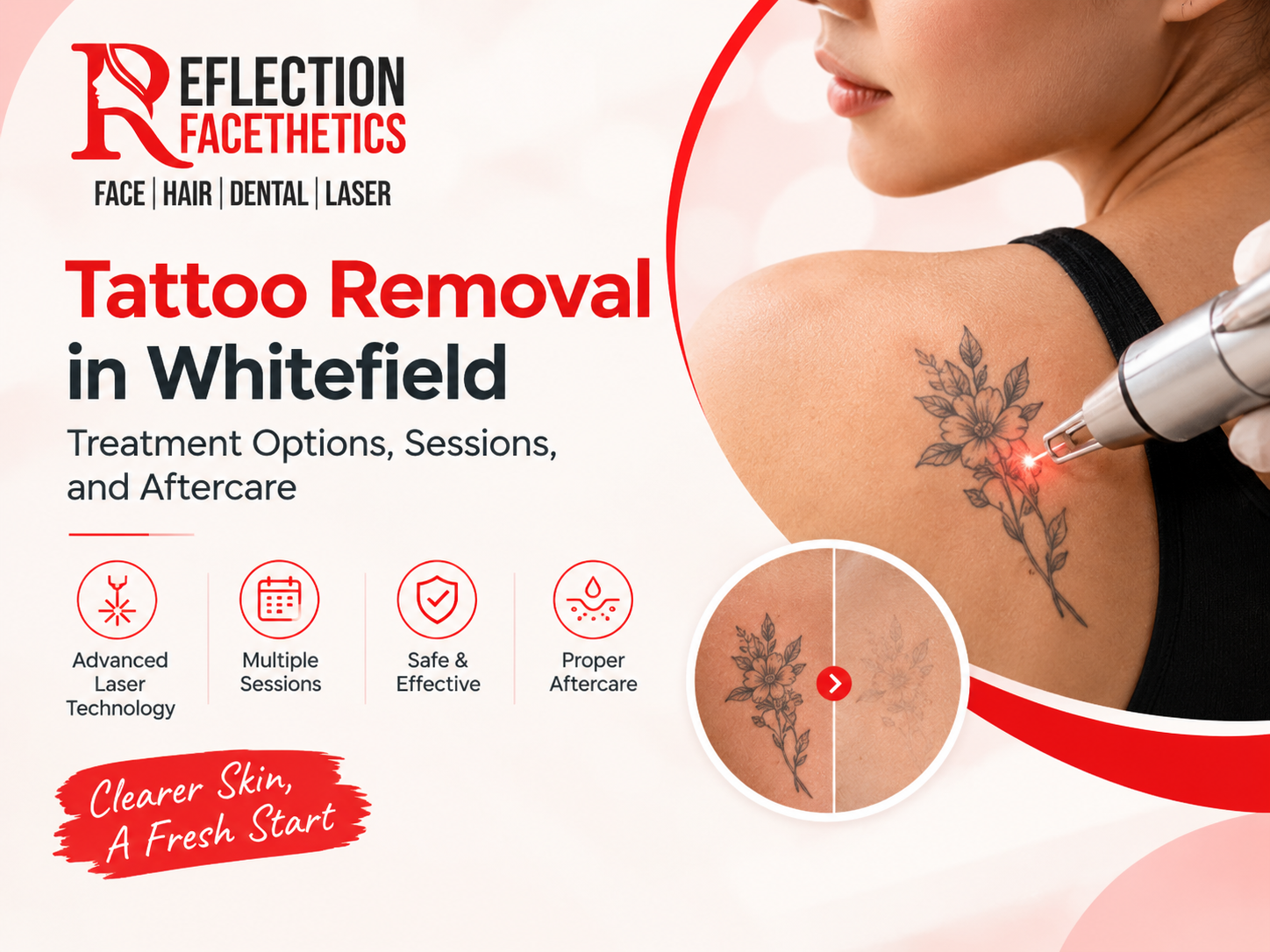
Tattoos can hold personal meaning, but preferences and circumstances may change over time. Some people want to remove a design that no longer reflects their identity, while others wish to fade an old tattoo before getting a new one. Modern tattoo removal techniques may help reduce unwanted tattoo pigment, although the results depend on several individual factors.
At Reflection Facethetics in Whitefield, Bangalore, people considering tattoo removal can seek professional guidance about suitable treatment options, expected sessions, and skin care after treatment. Dr. Deepika can help patients understand their concerns and discuss an appropriate approach based on their skin and tattoo characteristics.
How Does Tattoo Removal Work?
Laser tattoo removal is a commonly used approach that directs concentrated light energy towards tattoo pigment in the skin. The energy breaks the pigment into smaller particles, which the body’s natural processes gradually clear away. Different laser wavelengths may be needed for different ink colours.
Not every tattoo responds in the same way. Black and dark-blue pigments may respond differently from green, yellow, or red inks. Tattoo depth, ink density, location, age, and skin type can also affect the outcome. Complete removal cannot always be guaranteed, and some tattoos may leave faint pigment changes or scarring.
People searching for the Best Tattoo Removal Treatment In Bangalore should prioritise a qualified provider, suitable technology, a careful skin assessment, and realistic expectations rather than choosing a procedure based only on advertised results.
What Happens During a Tattoo Removal Process?
Treatment generally begins with a consultation. The provider reviews the tattoo’s size, colours, location, age, and any previous removal attempts. Medical history, skin sensitivity, and a tendency to develop raised scars may also be relevant.
During a laser session, protective eyewear is used, and the treatment area is exposed to controlled laser pulses. Patients may experience brief stinging or a snapping sensation. Cooling measures or other comfort options may be discussed depending on the treatment method and individual needs.
After treatment, temporary redness, swelling, tenderness, or small blisters may occur. These effects vary from one person to another. Following the provider’s aftercare instructions helps protect the treated skin while it heals.
How Many Sessions Are Needed?
Tattoo removal usually requires multiple sessions rather than a single appointment. The number depends on the tattoo’s size, ink colours, depth, density, location, and the body’s response to treatment. Professional tattoos may contain more densely packed pigment than some amateur tattoos, making removal more challenging.
Treatments are scheduled with breaks in between so the skin can heal and the body can gradually remove the broken-down pigment.Rushing treatments or repeating them too frequently can increase the risk of skin damage. A provider can estimate a likely treatment schedule during consultation, but the final number of sessions may change as the tattoo responds.
When comparing the Best Tattoo Removal Treatment In Bangalore, ask whether the recommended plan includes follow-up assessment and whether the provider explains the limitations of removing particular colours or older pigment.
What Influences Tattoo Removal Treatment Cost?
The Tattoo Removal Treatment Cost In Bangalore varies according to the size of the tattoo, the number of sessions required, the technology used, and the complexity of the ink. A small, single-colour design may require a different treatment plan from a large, multicoloured tattoo.
The total expense also depends on how much fading is needed and how the tattoo responds over time. During consultation, ask for a clear estimate, the expected session range, possible additional costs, and any aftercare requirements. An exact price should be confirmed by the clinic after assessing the tattoo rather than relying solely on general online estimates.
At Reflection Facethetics, patients can discuss their concerns and learn more about the clinic’s tattoo removal service before deciding whether to proceed.
Essential Aftercare Tips
Aftercare is an important part of recovery. Follow the treating professional’s instructions, which may include:
- Keep the area clean and handle it with care.
- Avoid picking blisters, scabs, or peeling skin.
- Protect the treated area from direct sunlight and use sun protection as advised.
- Avoid friction, irritating products, or activities that may disturb healing.
- Contact the clinic if symptoms worsen or you notice signs of infection.
Do not apply home remedies, harsh chemicals, or unapproved creams to speed up pigment removal. Seek medical advice for increasing pain, spreading redness, pus, fever, or other concerning symptoms.
Frequently Asked Questions
1. Is tattoo removal completely effective?
Some tattoos can be removed substantially, while others may only fade. Results depend on the ink, tattoo depth, skin characteristics, and treatment response. Complete removal cannot be guaranteed.
2. Is laser tattoo removal painful?
Patients may feel a brief snapping or stinging sensation. Comfort measures can help, but the level of discomfort varies with tattoo size, location, and individual sensitivity.
3. How long should a person wait between sessions?
The interval depends on the treatment plan and healing response. Sessions are generally spaced several weeks apart so the skin can recover and the body can clear pigment.
4. What is the Tattoo Removal Treatment Cost In Bangalore?
There is no single fixed cost for every tattoo. Size, colours, technology, and the number of sessions influence the total. A consultation is needed for an individual estimate.
5. Can every ink colour be removed?
Different colours respond differently to laser wavelengths. Some pigments, including certain light or bright colours, may be more difficult to remove. A professional assessment helps set realistic expectations.